Filipinos are curious, concerned, and ready to act on ESG.
Understanding its pillars is the first step toward meaningful change.
The True Cost of Growth
Every peso of profit draws something from the planet. Whether it’s raw materials, water, or energy, business growth always has an environmental cost.
The challenge for companies today isn’t whether to grow, but how to grow responsibly — how to satisfy shareholders without sacrificing the planet that sustains both businesses and consumers. After all, the people most affected by environmental damage are the same ones who patronize a company’s products and services.
Enter ESG: A Framework for Responsible Growth
As companies search for ways to balance profit and purpose, ESG has emerged as a global framework to measure not just how much a company grows, but how responsibly it does so.
Think of ESG as a compass that guides a company toward long-term trust — covering how it treats the planet, its people, and the principles that govern its actions.
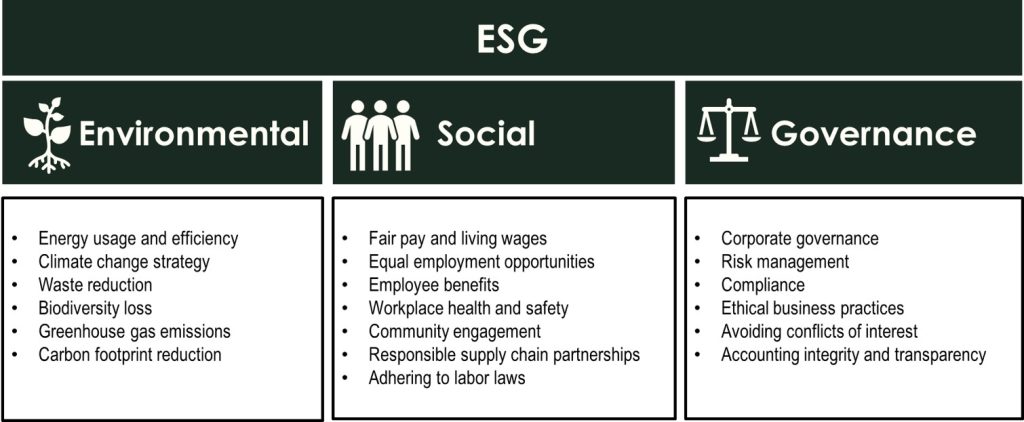
ESG Framework, broken down by its components (Project ESG 2023)
But while ESG has become a corporate buzzword across boardrooms worldwide, the question remains: How much of it resonates with the everyday Filipino?
Heard of It? Not Quite Yet.
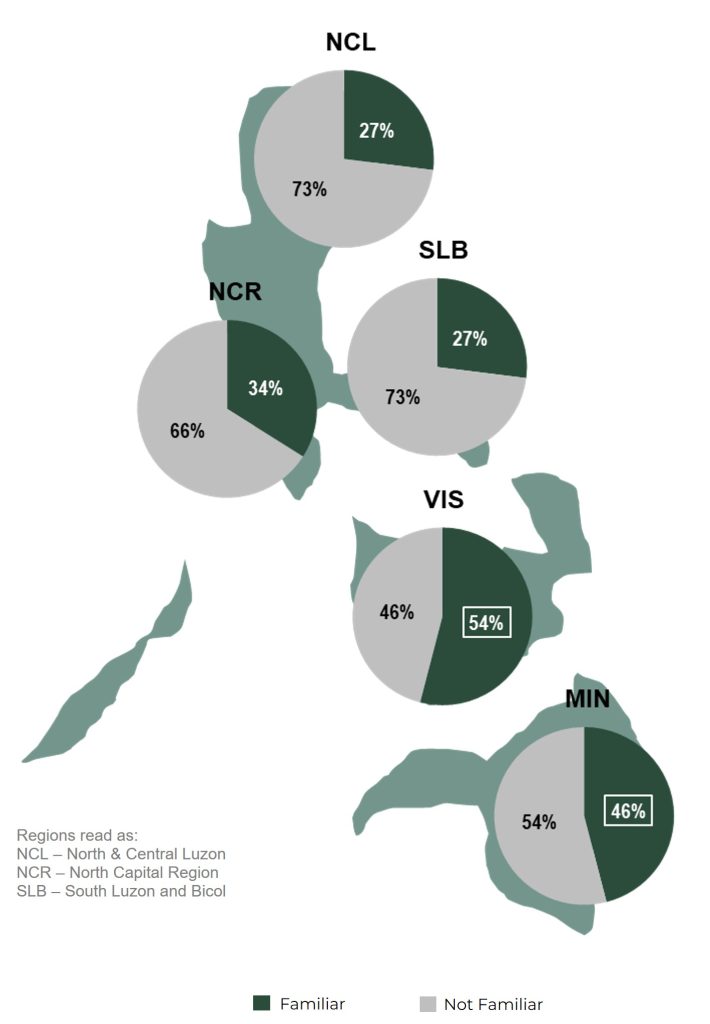
Familiarity Levels on ESG Across Regions (Project ESG 2023)
Only a third of Filipinos are familiar with ESG when asked unaided, well below the global average of 45%. Interestingly, awareness is higher in Visayas (54%) and Mindanao (46%) compared to NCR (34%), NCL (27%) and SLB (27%).
This contrast could be tied to lived experience. In rural areas, where communities directly feel the effects of typhoons, droughts, or resource scarcity, sustainability isn’t theory — it’s a fact of life. In more urban areas, the language of ESG may sound distant, corporate, or academic.
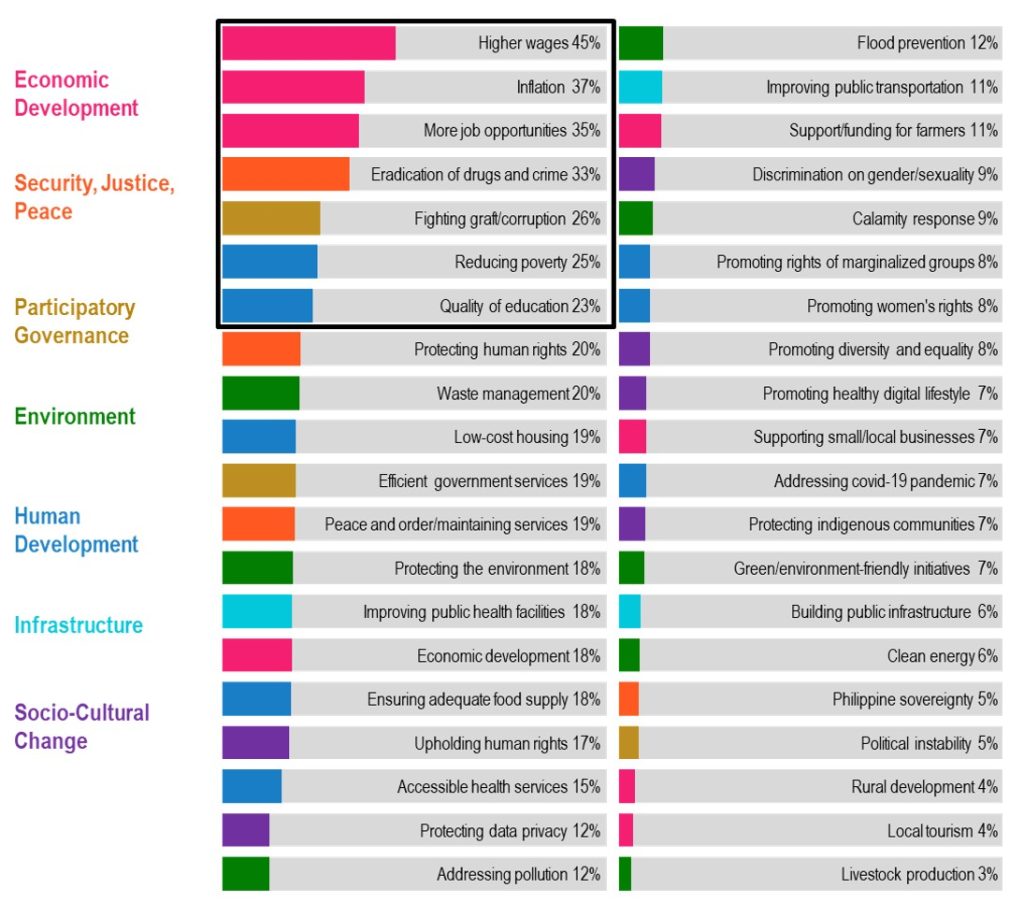
Top of Mind Concerns (Project ESG 2023)
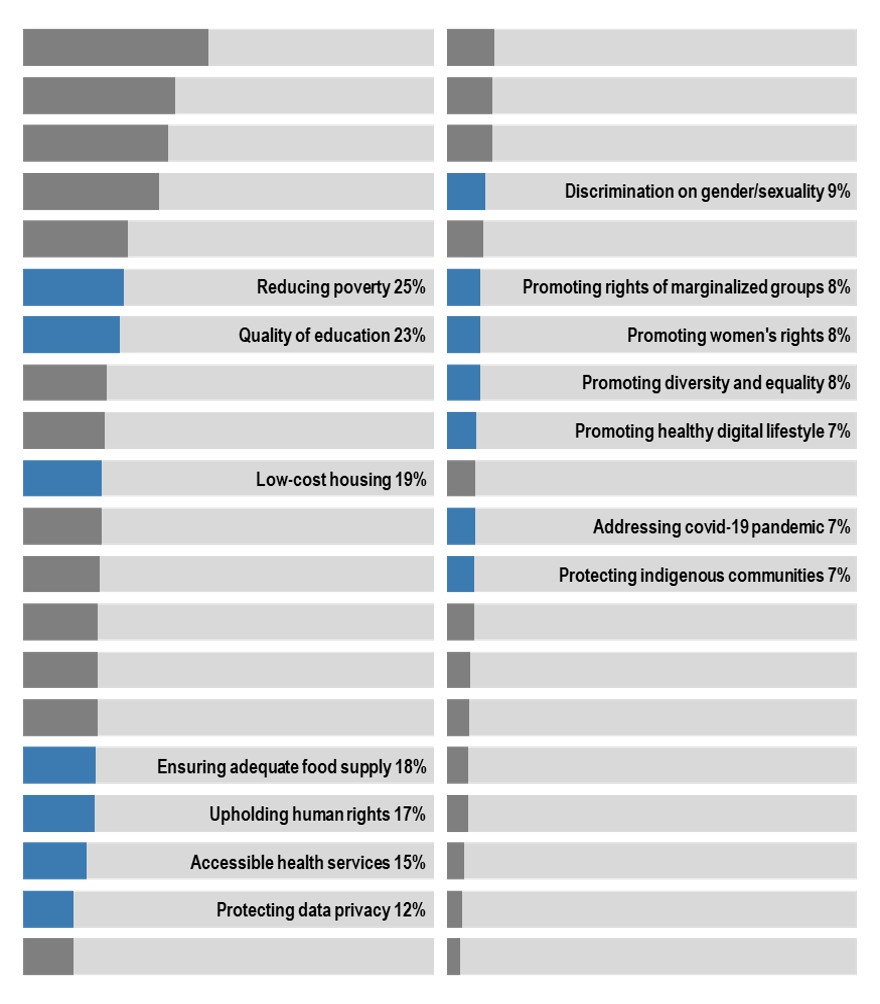
Another factor that hinders ESG awareness and understanding? Daily realities shape what people care about first. When asked what issues matter most, Filipinos ranked higher wages (47%), inflation (37%), job opportunities (35%), crime reduction (33%), corruption (26%), and poverty (25%) as top concerns.
These are deeply practical worries — but they aren’t separate from ESG. If implemented properly, ESG can be seen not as a lofty concept, but as a path to better livelihoods, safer workplaces, and fairer opportunities.
💡 INSIGHT: Awareness isn’t just about information — it’s about proximity. You intuitively understand what you live with daily.

What Filipinos Understand of ESG — and What They Don’t
ESG may have three pillars — Environmental, Social, and Governance — but Filipinos don’t understand them equally well. Some pillars feel more tangible and relatable, while others remain abstract or unfamiliar.
-
1. Environment: The Familiar Frontline
Among those aware of ESG, “Environment” is the most understood pillar.
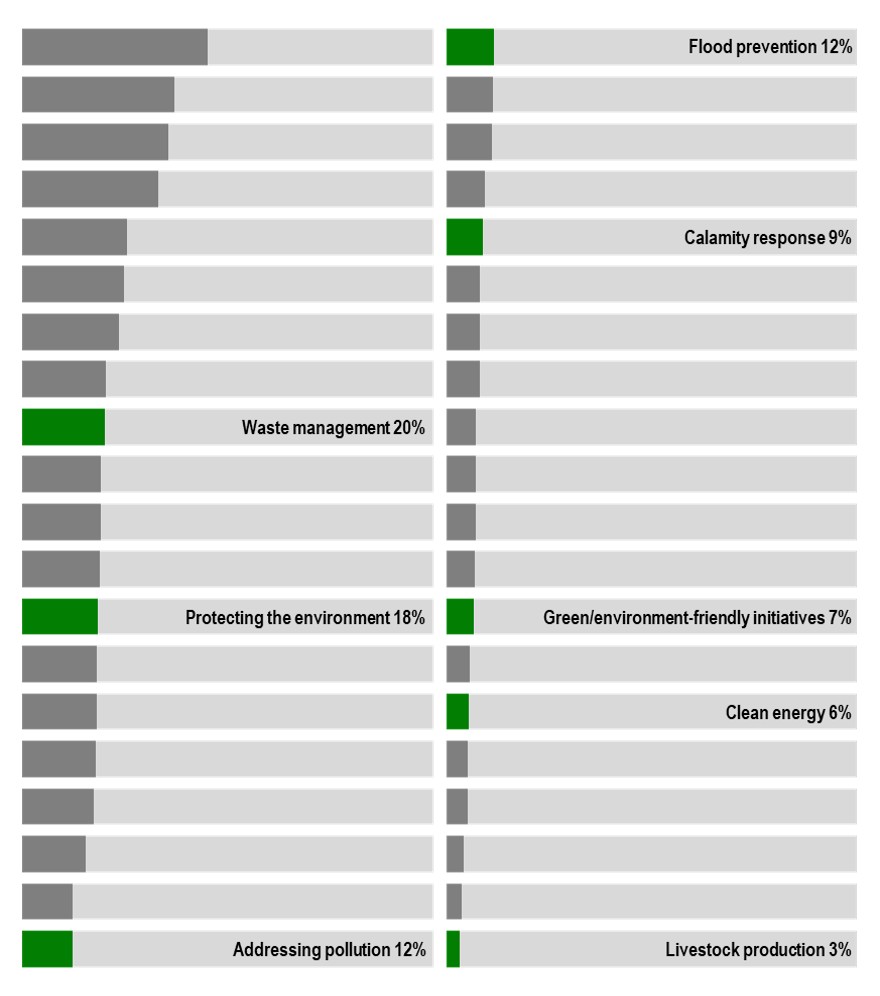
Focus on Environmental Concerns among Top of Mind Concerns (Project ESG 2023)
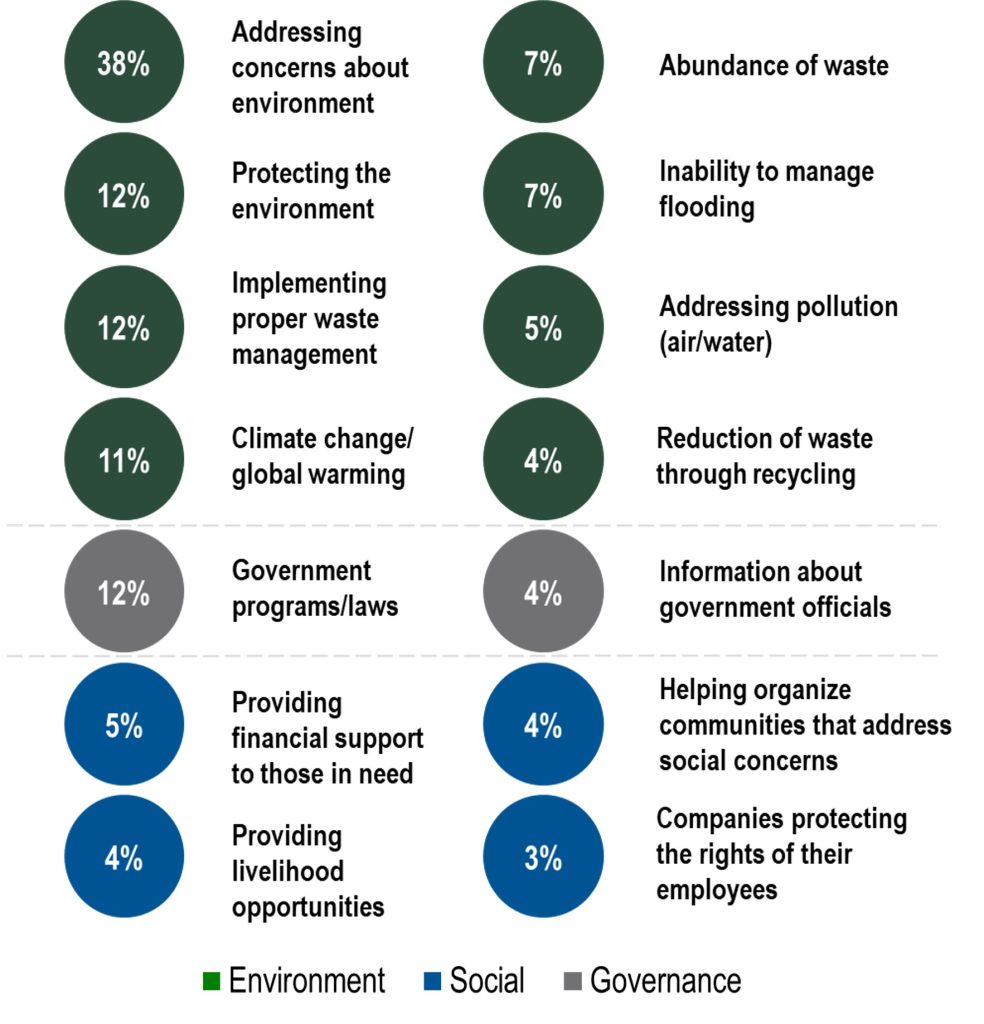
Filipinos associate it with addressing environmental concerns (38%), protecting nature (12%), managing waste (12%), and fighting climate change (11%), among others.
That’s no surprise — when you live in one of the world’s most climate-vulnerable countries, environmental issues are naturally a pressing concern.
💡 INSIGHT: The “E” of ESG speaks our language because the environment is the most tangible of the three pillars.
-
2. Social: Heartfelt, But Half-Understood
Filipinos generally get what “Social” in ESG means: helping communities and providing livelihoods are top responses.
Focus on Social Concerns among Top of Mind Concerns (Project ESG 2023)
Among those aware of ESG, 4% of respondents said “providing livelihood opportunities,” 4% said “helping organize communities,” and 3% mentioned “protecting employee rights.”
However, confusion shows up in what “social” is not: about 5% interpreted it mainly as “providing financial support to those in need,” a more charity-driven understanding.
Moreover, understanding the social aspect means going below the tip of the iceberg, with inclusivity efforts, ethical supply chains, and more nuanced issues also present under this pillar.
💡 INSIGHT: For many Filipinos, “Social” still means giving back, but it should also mean doing right. The challenge is shifting understanding from generosity to social justice.
-
3. Governance: The Missing Piece
Governance is where understanding drops off.
View on Environment, Governance, Social as ESG Pillars (Project ESG 2023)
The association with government is the problem. 12% mentioned government laws and 4% cited information about officials, showing a strong tendency to mistake national governance for corporate governance, which zero respondents correctly identified.
The “Governance” pillar suffers from distance. People can see tree-planting drives and relief goods, but they rarely see how boardroom decisions or corporate ethics shape those environmental initiatives. Until governance becomes part of public conversation — not just corporate jargon — it will remain the silent pillar of ESG: essential yet overlooked.
💡 INSIGHT: Governance is misunderstood, but that’s why it’s an opportunity: to redefine “Governance” as transparency, fairness, and reliability.
When It Clicks, It Clicks
Interestingly, once ESG is explained, Filipinos don’t just understand it — they embrace it.
Showing their support for efforts that improve their communities, many Filipinos pay close attention to the initiatives that companies take under the ESG framework. Brands that can clearly show progress toward these goals tend to receive strong support from the public.
Preferences for the Relationship Between ESG and Companies (Project ESG 2023)
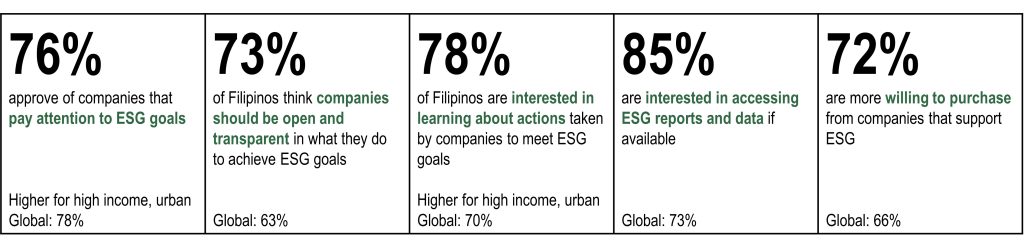
- ➣ 76% approve of companies that pay attention to ESG goals (Global: 78%)
- ➣ 73% want transparency around how companies meet ESG goals (Global: 63%)
- ➣ 78% are interested in learning about ESG actions (Global: 70%)
- ➣ 85% would access ESG reports if available (Global: 73%)
- ➣ 72% are more likely to buy from ESG-supporting companies (Global: 66%)
And it turns out that Filipinos are ahead of the global curve on ESG, as seen in several metrics above. When your daily life is shaped by climate and social issues, learning about ESG can feel like a “lightbulb moment” — suddenly, the dots between personal experience, social responsibility, and corporate action just “click.”
💡 INSIGHT: There is a strong appetite for ESG when it’s understood. The challenge: how might brands and companies start the conversation?
Key Takeaways
While awareness and understanding of ESG may still be limited, the data shows strong interest and receptiveness among Filipinos. The challenge now is turning curiosity into understanding — and understanding into action.
- 1. There’s room to grow ESG awareness — especially given Filipinos’ strong interest once the concept is explained.
- 2. The Environment pillar leads the conversation, reflecting how personal environmental issues are to us.
- 3. The Social pillar has heart but lacks depth — Filipinos understand empathy; companies must connect it to ethical practices.
Governance remains the biggest gap — often mistaken for government, it needs to be reintroduced as corporate integrity.
Download the ESG Report here
Share


How do you feel about this article?


Survey Details
This survey was conducted across 17 countries, covering all major continents, with a total random sample size of N=9,627 respondents interviewed globally. In each country, a representative sample of around 400 to 1,000 men and women was randomly selected. Data was collected through a combination of face-to-face, telephone, and online interviews, using a structured questionnaire. Studies were conducted by research agency partners within AGMR, represented locally by PSRC.