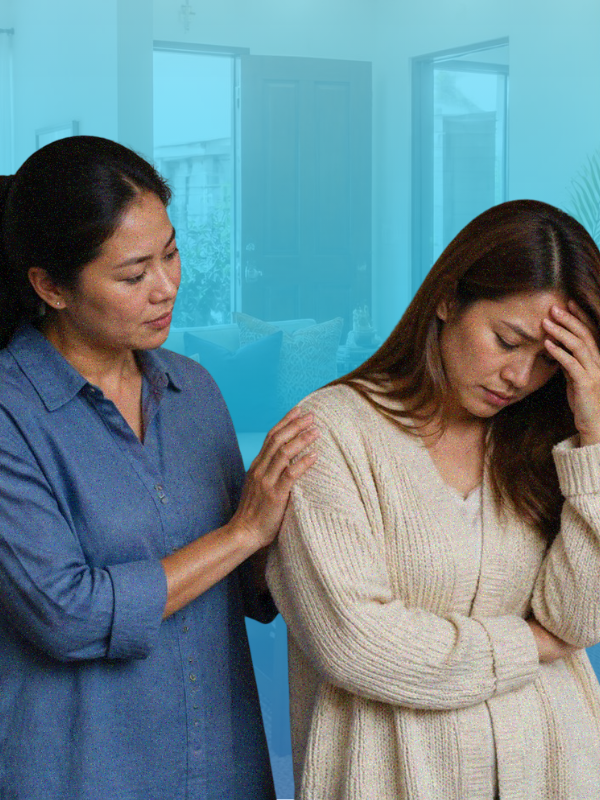
Recovery isn’t linear, and the same could probably be said about COVID-19 in the Philippines. Here’s what the path forward looks like for the nation.
The year 2020 marked an unprecedented moment in modern history as the world came to a near-complete standstill due to the COVID-19 pandemic. What began as a mysterious illness in Wuhan, China, in December 2019 quickly escalated into a global crisis. It wasn’t long before the virus reached Philippine shores, with the first suspected case reported soon after the outbreak began.
By March 15, 2020, the Philippines officially entered a nationwide lockdown. More than 100 million Filipinos were suddenly confined to their homes, as businesses, schools, and public transportation ground to a halt. What followed was one of the longest lockdowns experienced by any country in the world– a prolonged period of uncertainty, adjustment, and resilience.
Throughout this time, communities adapted in creative ways, from remote work and online learning to community pantries and digital services that helped people stay connected and informed. The healthcare system was pushed to its limits, and yet frontliners across the country rose to the challenge.
After more than three years of varying restrictions and safety measures, President Ferdinand Marcos Jr. officially lifted the State of Public Health Emergency in July 2023. As of March 2024, the Philippines has recorded over 4 million confirmed COVID-19 cases. While the pandemic left lasting effects on public health, the economy, and daily life, it also brought out a sense of unity, adaptability, and a renewed focus on digital transformation and healthcare preparedness.
Where are we now?
As the country moves forward, Filipinos are experiencing different levels and paces of recovery. Some are bouncing back quickly– regaining financial stability, returning to pre-pandemic routines, and even finding new opportunities in the post-COVID world. But for others, especially those hit hardest by job loss or health challenges, the road to recovery has been slower and more uncertain.
There’s also a clear divide in how people perceive their recovery. While many are cautiously optimistic, only about a third of Filipinos feel they’ve made major progress and are recovering at a fast pace. The rest are still navigating challenges, whether it’s rebuilding savings, adjusting to new work setups, or catching up on missed schooling and healthcare.
What’s clear is that pandemic recovery isn’t a one-size-fits-all journey. Filipinos continue to adapt in their own ways, leaning on resilience, community, and a growing digital landscape to move forward, one step at a time.
According to recent findings, 54% of Filipinos say they’ve experienced a major recovery, while 31% describe their recovery as moderate, and 15% feel they’ve had little to no recovery at all. It’s a mixed bag that shows how uneven the journey has been across the country.
To better understand these experiences, we can think of Filipino pandemic recovery along two key dimensions:
- How much people feel they’ve recovered (little, moderate, or major), and
- How quickly that recovery has happened (slow vs. fast).
Interestingly, only about a third of Filipinos say they’ve made major progress at a fast pace, suggesting that while many have gotten back on their feet, it hasn’t necessarily been easy or quick.
- Among those who recovered slowly, only 16% say they made major progress, while others report either moderate (18%) or little recovery (12%).
- Meanwhile, among those who recovered more quickly, 38% say their recovery was major, and 13% say moderate, with just 3% saying they made little recovery.
Between Genders
When it comes to gender, men and women reported very similar recovery experiences, with only slight variations in pacing and perception.
- 45% of women say their recovery was slow-paced, compared to 47% of men.
- Among women who recovered slowly, 15% say they recovered majorly, while 16% say moderately, and 14% say they’ve barely recovered.
- Men in the same boat report slightly higher major recovery at 17%, moderate at 20%, and 11% say little recovery.
Faster-recovering women fared slightly better: 40% say their recovery was major, versus 36% of men.
Across Generations
Recovery appears to look different between generations:
- Boomers (60% reporting faster recovery) were most likely to say their bounce-back was both quick and major (47%).
- Gen Z and Millennials were evenly split between slow and fast recovery, with Gen Z leaning slightly toward slow pacing (47%).
- Gen X was similarly divided, though they had one of the higher reports of little recovery at a slower pace (17%).
While all age groups have stories of resilience, younger Filipinos, especially Gen Z and Millennials, seem to be experiencing a slightly slower, more cautious comeback, possibly due to early-career or education disruptions.
Between Income Groups
When looking at socio-economic class, the picture becomes more nuanced.
- Higher income groups (ABC1) are more likely to say their recovery was fast (56%), but only 11% of those recovering slowly in this group say they made major progress.
- In contrast, Class C2 and DE report a greater sense of recovery despite slower pacing, with 18% of DE’s slower recoverees still claiming a major comeback.
This suggests that while higher-income Filipinos may have had better access to tools and support systems for a faster recovery, many from lower-income groups have shown remarkable resilience even in tougher conditions.
Recovery Across Regions
Regional differences offer some of the clearest contrasts in pandemic recovery:
- Visayas stands out with 67% reporting a fast recovery, and a remarkable 54% of those saying they experienced major progress– the highest among all regions.
- Mindanao also shows strong figures, with 58% reporting fast recovery, and 46% of those claiming major recovery.
- Meanwhile, Southern Luzon (SLB) and Northern/Central Luzon (NCL) leaned more toward slow-paced recovery (over 50%), with a greater mix of moderate or little gains.
- Metro Manila (NCR) had a fairly even split, but notably, only 8% of slow-paced recoverees in the capital say they’ve recovered significantly, pointing to the lingering effects of urban lockdowns and economic strain.
Recovery Isn’t One-Size-Fits-All
While the majority of Filipinos now say they’ve recovered from the pandemic, there’s a clear divide in how fast and how fully people feel they’ve bounced back. Age, income, region, and even gender all play roles in shaping that experience.
But one thing is clear: resilience is everywhere. Whether it’s the quiet determination of slow but steady progress, or the triumphant return to pre-pandemic stability, Filipinos continue to move forward– with hope, grit, and a deep sense of community.
Hopefulness aside, it’s still worth asking– why are some segments recovering better and faster than others? We’ll explain all of this in a follow-up report.
Share


How do you feel about this article?


Survey Details
This survey was conducted on a sample size of N=1000 from November 25 to December 13, 2023. Data was collected in a series of face-to-face interviews. Respondents were males and females, ranging 18-65 years of age. Respondents were from class ABCDE households, and spanning a nationwide (both urban and rural) scope.